
In today’s rapidly evolving business landscape, artificial intelligence (AI) has transitioned from a futuristic concept to an essential tool for competitiveness. Advanced AI models such as ChatGPT, DeepSeek, Blaze, and Qwen are not only reshaping industries but also delivering quantifiable benefits. For African Chief Executive Officers (CEOs), the imperative is clear: embrace AI or risk being left behind.
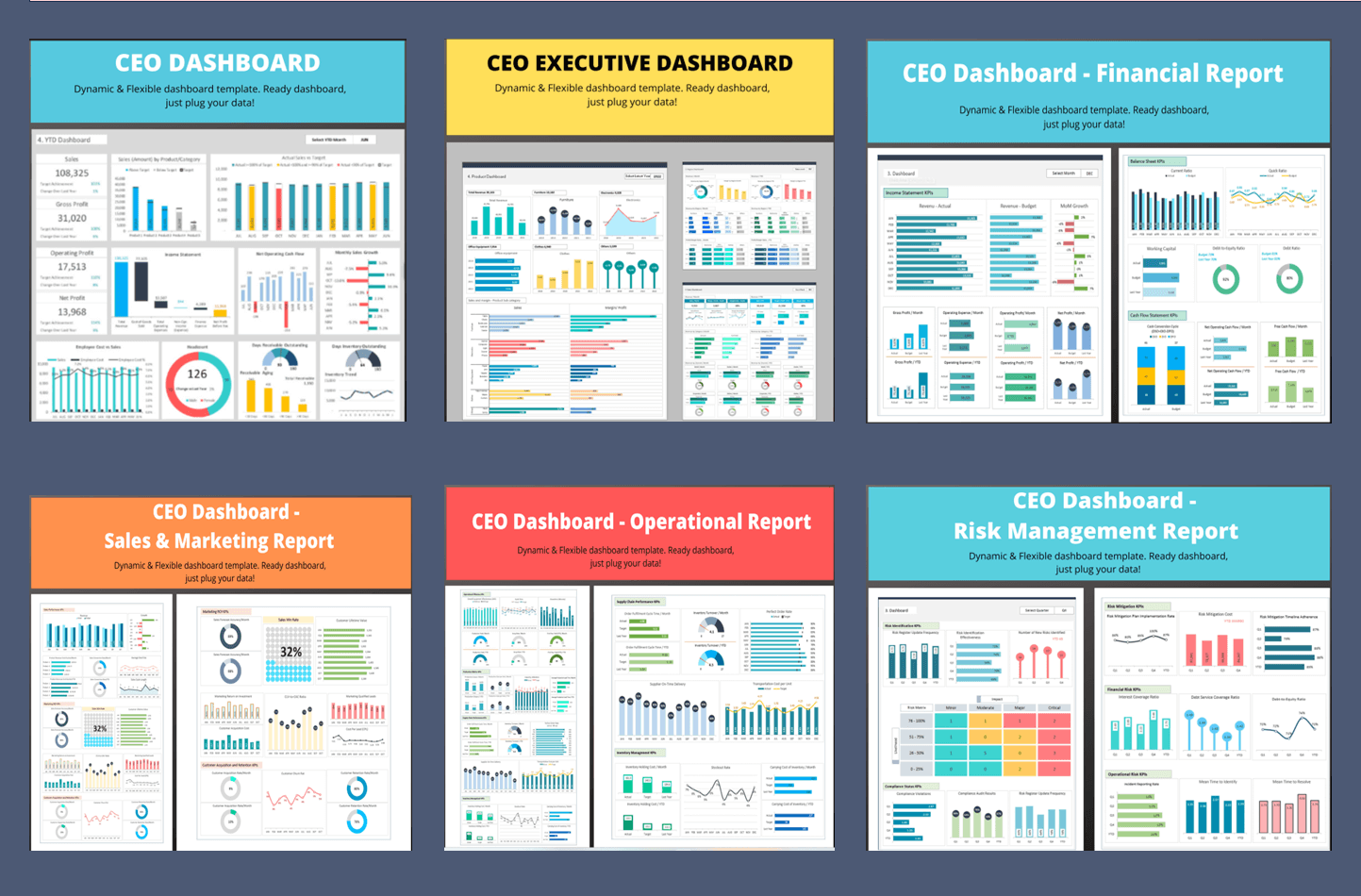
The Transformative Power of AI
AI’s integration into business operations offers several measurable advantages:
- Cost Reduction: A significant 44% of AI adopters report reduced operational costs, achieved through automation and streamlined processes.
- Enhanced Decision-Making: Companies leveraging AI experience a 25% reduction in the time required to gather insights, enabling faster and more informed strategic decisions.
- Customer-Centric Services: AI tools have improved customer engagement by 85% in companies that actively use them, leading to higher satisfaction and loyalty.
- Market Expansion: The AI-driven customer service market was valued at $4.5 billion in 2023 and is growing at a compound annual growth rate (CAGR) of 21% between 2023 and 2030, indicating significant opportunities for businesses to expand their reach.
Global Enterprises Are Already on Board
Worldwide, over 80% of businesses have embraced AI to some extent, viewing it as a core technology within their organizations. Notably, 42% of these firms have reported cost reductions across various business functions due to AI integration.
The Cost of Inaction for African Businesses
For companies in Africa, failing to adopt AI can have significant repercussions:
- Higher Operational Costs: Without AI-driven efficiencies, businesses may incur higher operational expenses compared to their AI-enabled competitors.
- Loss of Market Share: As global companies optimize with AI, local firms may struggle to compete, leading to a potential loss in market share.
- Brain Drain: Talented professionals may migrate to AI-driven enterprises, leaving traditional businesses at a disadvantage.
- Economic Lag: Nations that fail to integrate AI risk falling behind in the global economic race, reducing their growth potential.

AI as an Opportunity, Not a Threat
Spending on AI in the Middle East, Türkiye, and Africa (META) totaled $4.5 billion in 2024 and is projected to surge to $14.6 billion by 2028, representing a compound annual growth rate (CAGR) of 34%.
The reduction in costs and higher accessibility of AI shall be aiding every business
The DeepSeek case-study, I came across, I am using…
Announcement of DeepSeek pounded the valuation of NVIDIA and stunned OpenAI.
Finally had a chance to dig into DeepSeek’s …
*Let me break down why DeepSeek’s AI innovations are blowing people’s minds (and possibly threatening Nvidia’s $2T market cap) in simple terms…*
First, some context: Right now, training top AI models is INSANELY expensive. OpenAI, Anthropic, etc. spend $100M+ just on compute. They need massive data centers with thousands of $40K GPUs (Graphic Processing Units – used for large scale computations needed for gaming, AI etc). It’s like needing a whole power plant to run a factory.
*DeepSeek just showed up and said “LOL what if we did this for $5M instead?” And they didn’t just talk – they actually DID it.* Their models match or beat GPT-4 and Claude on many tasks. The AI world is (as my teenagers say) shook.
How? They rethought everything from the ground up. Traditional AI is like writing every number with 32 decimal places. DeepSeek was like “what if we just used 8? It’s still accurate enough!” Boom – 75% less memory needed.
Then there’s their “multi-token” system. Normal AI reads like a first-grader: “The… cat… sat…” DeepSeek reads in whole phrases at once. 2x faster, 90% as accurate. When you’re processing billions of words, this MATTERS.
But here’s the really clever bit: They built an “expert system.” Instead of one massive AI trying to know everything (like having one person be a doctor, lawyer, AND engineer), they have specialized experts that only wake up when needed.
Traditional models? All 1.8 trillion parameters active ALL THE TIME. DeepSeek? 671B total but only 37B active at once. It’s like having a huge team but only calling in the experts you actually need for each task.
The results are mind-blowing:
– Training cost: $100M → $5M
– GPUs needed: 100,000 → 2,000
– API costs: 95% cheaper
– Can run on gaming GPUs instead of data center hardware
“But wait,” you might say, “there must be a catch!” That’s the wild part – it’s all open source. Anyone can check their work. The code is public. The technical papers explain everything. It’s not magic, just incredibly clever engineering.
*Why does this matter? Because it breaks the model of “only huge tech companies can play in AI.” You don’t need a billion-dollar data center anymore. A few good GPUs might do it.*
*For Nvidia, this is scary. Their entire business model is built on selling super expensive GPUs with 90% margins. If everyone can suddenly do AI with regular gaming GPUs… well, you see the problem.*
And here’s the kicker: DeepSeek did this with a team of <200 people. Meanwhile, Meta has teams where the compensation alone exceeds DeepSeek’s entire training budget… and their models aren’t as good.
*This is a classic disruption story:* Incumbents optimize existing processes, while disruptors rethink the fundamental approach. DeepSeek asked “what if we just did this smarter instead of throwing more hardware at it?”
*The implications are huge:*
– AI development becomes more accessible
– Competition increases dramatically
– The “moats” of big tech companies look more like puddles
– Hardware requirements (and costs) plummet
Of course, giants like OpenAI and Anthropic won’t stand still. They’re probably already implementing these innovations. But the efficiency genie is out of the bottle – there’s no going back to the “just throw more GPUs at it” approach.
Final thought: *This feels like one of those moments we’ll look back on as an inflection point. Like when PCs made mainframes less relevant, or when cloud computing changed everything.*
*AI is about to become a lot more accessible, and a lot less expensive. The question isn’t if this will disrupt the current players, but how fast?* One of the reason of market fall across the globe.. (included in the article, as received)
What Can CXOs Do Today?
To remain competitive, African CXOs should consider the following steps:
- Educate Leadership Teams: AI literacy at the executive level is crucial for informed decision-making. Educating African leadership teams in DSAIRe.
- Invest in AI Training: Upskilling employees ensures a smooth transition to AI-powered operations.
- Partner with AI Providers: Collaborate with AI firms to integrate AI into core business functions. A DSAIRe impact: A Healthcare group in Kenya
- Develop an AI Strategy: A clear roadmap for AI adoption will future-proof businesses against rapid changes.
Final Thoughts
The AI revolution is here, and African businesses must act now. AI is not just a tool—it is the foundation of the next wave of economic growth and business transformation. The choice is simple: adapt and thrive or resist and fall behind. As global industries shift toward AI-powered operations, Africa has an opportunity to embrace innovation, boost competitiveness, and lead in the digital economy. The future belongs to those who seize it today.
Invite us to initiate you into and hand-hold you through this AI driven transformational journey
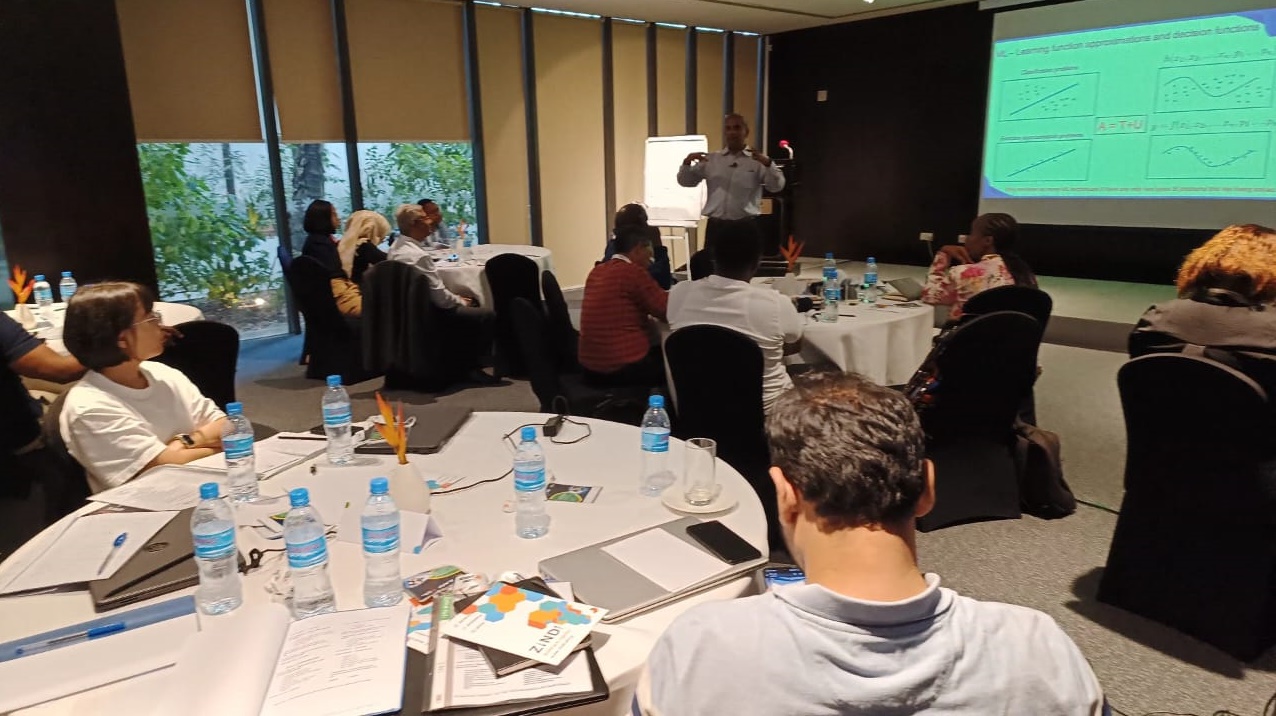
Invite CL Educate along with IIT Madras Zanzibar to conduct a Data Science AI Retreat for your CXO team and top leadership. We have been facilitating Industry bodies and Organizations across Africa along with Asia-Pacific to embrace AI, from educating the leadership to training the key personnel, and then consulting, planning and executing projects to bring about the transformation. In Kenya, we have signed an MOU with Kenya Association of Manufacturers to facilitate the transformation of manufacturing sector, using Data Science and AI.
For broad aspects of DSAIRe, and details kindly visit the KAM DSAIRe Webpage that covers everything to give you deep insights into the 2-day Data Science immersion programe.

 www.sreeni.org