
Insurance companies leverage data science and AI across various aspects of their operations to enhance decision-making, streamline processes, and improve customer experiences.
A few examples here highlight how insurance companies leverage data science to design various tailormade policies, engage customers delightfully, understand the riskiness of customers, identify fraudulent claims, predict customer churn and implement targeted retention strategies. By analyzing vast datasets, identifying patterns, and using predictive modeling, insurers can intervene at the right time to address customer concerns, enhance satisfaction, and ultimately reduce churn rates.
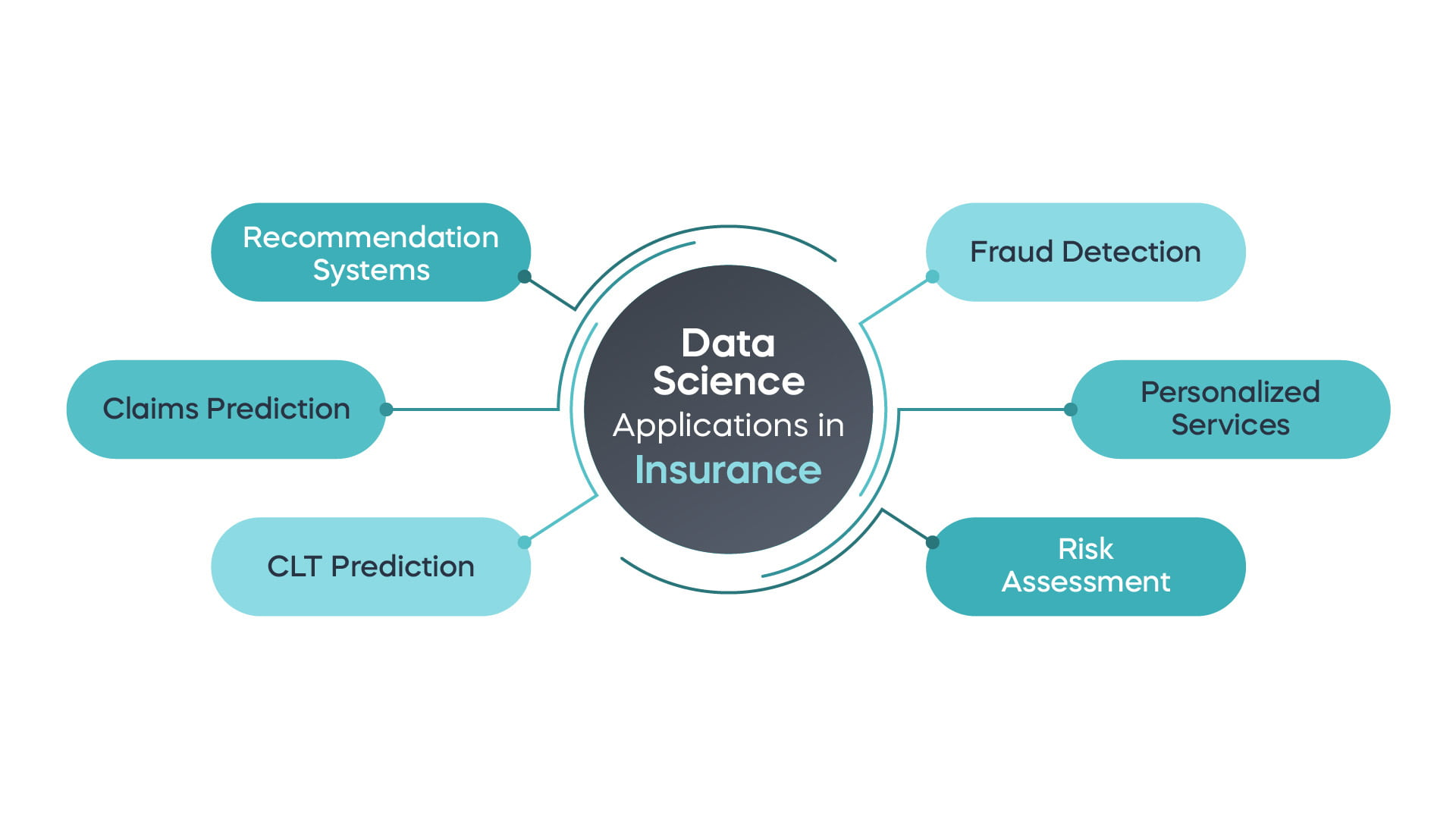
Here are several ways in which insurance companies utilize these technologies:
1. Underwriting and Risk Assessment:
Predictive Modeling: Insurance companies use predictive models based on historical data to assess risks accurately. Machine learning algorithms help in predicting the likelihood of claims and determining appropriate premium rates.
- Geico (USA) – Underwriting and Pricing:
Geico has employed data science and machine learning to enhance its underwriting process. The company uses predictive modeling to assess risk factors, determine appropriate premium rates, and offer personalized quotes to customers based on their driving behavior and other relevant data.
- Digit Insurance (India) – AI in Underwriting and Claims:
Digit Insurance, an Insurtech firm, has emphasized the use of AI in underwriting and claims processing. The company employs machine learning algorithms to assess risks during underwriting and streamline claims processing through automation.
- Max Life Insurance (India) – Predictive Analytics for Underwriting:
Max Life Insurance has explored predictive analytics for underwriting processes. By leveraging data science models, the company aims to assess risks more accurately and make informed decisions during the underwriting stage.
2. Claims Processing:
Fraud Detection: AI is employed to detect fraudulent claims by analyzing patterns, anomalies, and inconsistencies in data.
Automated Claims Processing: Automation through AI streamlines claims processing, reducing manual efforts and accelerating the settlement process.
- Lemonade (USA) – Claims Processing:
Lemonade, an Insurtech company, has gained attention for its use of AI in claims processing. The company uses a chatbot named Jim to handle claims efficiently. Jim uses natural language processing to understand customer claims, making the process faster and more user-friendly.
- HDFC ERGO General Insurance (India) – AI in Claims Processing:
Similarly, HDFC ERGO has implemented AI in claims processing to enhance efficiency. AI algorithms are used to assess, and process claims more quickly, reducing the time taken for claim settlements.
- Allianz (Global) – Fraud Detection:
Allianz has implemented AI for fraud detection in claims. The company uses machine learning algorithms to analyze patterns and anomalies in data, helping identify potentially fraudulent claims. This proactive approach helps prevent fraudulent activities and reduces financial losses.

3. Customer Service and Engagement:
Chatbots and Virtual Assistants: AI-powered chatbots assist customers with routine inquiries, policy information, and claim status updates, providing quick and efficient customer support.
Personalized Recommendations: Data science enables insurers to analyze customer data and provide personalized policy recommendations based on individual needs and behaviors.
- Ping An Insurance (China) – Customer Service and Engagement using chat bots.
- Reliance General Insurance (India) – Chatbots for Customer Service:
- Aviva (UK) – Personalized Recommendations:
Aviva uses data analytics to analyze customer data and provide personalized insurance recommendations. By understanding individual preferences and behaviors, Aviva can tailor its product offerings to better meet the specific needs of its customers.
4. Telematics for Auto Insurance:
Usage-Based Insurance (UBI): Insurers use telematics devices to collect real-time data on driving behavior. This data informs premium calculations, allowing for more accurate pricing based on individual risk profiles.
- AXA (Global)
AXA has integrated telematics into its auto insurance offerings. Through the use of IoT devices and mobile apps, AXA collects data on driving behavior, allowing for personalized pricing based on individual risk profiles and encouraging safer driving habits.
- ICICI Lombard General Insurance (India)
ICICI Lombard has incorporated telematics and IoT devices into its motor insurance offerings. Customers can opt for a device that monitors their driving behavior, allowing for personalized pricing based on individual risk profiles.
5. Customer Segmentation and Targeting:
Data Analytics: Insurance companies analyze customer data to segment their customer base, enabling targeted marketing, customized products, and personalized communication.
- Progressive (USA) –
Progressive employs data analytics to segment its customer base and target specific demographics with tailored marketing strategies. This enables the company to offer products and discounts that align with the preferences and needs of different customer segments.
- SBI Life Insurance (India) –
SBI Life Insurance has utilized data science for customer segmentation and targeted marketing. By analyzing customer data, the company can tailor its marketing strategies to specific customer segments, offering personalized products and services.

6. Risk Mitigation and Loss Prevention:
IoT Devices: Insurers leverage Internet of Things (IoT) devices for risk mitigation, such as installing sensors to monitor property conditions and alerting homeowners to potential risks.
Predictive Analytics: Data science models predict potential risks and allow insurers to take proactive measures to prevent losses.
- Swiss Re (Global)
Swiss Re utilizes data science and predictive analytics to assess and mitigate risks. The company uses models that incorporate a wide range of data sources to identify potential risks and vulnerabilities, enabling proactive risk management strategies.
- New India Assurance Company – Data Analytics for Risk Management:
New India Assurance Company has employed data analytics for risk management. By analyzing a wide range of data sources, including market trends and historical claims data, the company aims to make data-driven decisions to mitigate risks effectively.
7. Product Development and Pricing:
Market Analysis and customer behaviour: Data science helps insurers analyze market trends, customer behaviour, competitor offerings, and customer preferences to develop new products and pricing strategies.
- Root Insurance (USA) – Telematics and smartphone technology for Auto Insurance: tracks the driving behaviour of policy holders – speed, breaking patterns, driving frequency. Safer drivers pay lower premiums.
- ZhongAn (China) – Ecosystem Data for Customized Products: Leverages data from various ecosystems, including e-commerce and finance, to better understand customer behavior. This data is used to design customized insurance products tailored to specific customer needs.
- Admiral Insurance (UK) – MultiData Approach: Considering various factors beyond traditional demographic data. The company analyzes data related to online behavior, purchasing habits, and other non-traditional indicators to assess risk. Refines its pricing strategies, offer more competitive rates, and tailor products to specific customer segments based on a comprehensive understanding of individual risk profiles.
- Discovery Insure (South Africa) – Behavioral-Based Pricing for auto insurance: The company encourages policyholders to adopt safer driving habits through telematics devices and mobile apps – safer drivers are rewarded with lower premiums. The approach not only promotes road safety but also allows the insurer to offer personalized and dynamic pricing based on individual risk profiles.
8. Reinsurance Optimization:
Risk Modeling: Insurers use AI and data science to model and assess risks, optimizing their reinsurance strategies and ensuring financial stability.
- Swiss Re: The company utilizes predictive modeling and machine learning algorithms to assess and model risks comprehensively. By analyzing a vast array of data sources, including historical claims data, market trends, and external factors, Swiss Re can make more informed decisions about reinsurance strategies. This allows the company to optimize its reinsurance portfolio, manage risks effectively, and ensure financial stability.
- Munich Re: Employs data science for risk modeling and portfolio optimization. The company uses advanced analytics to assess and quantify risks associated with various types of insurance coverage. Enables the company to optimize its reinsurance portfolio by identifying areas of potential concentration risk, understanding the impact of various perils, and making strategic decisions to enhance overall risk management. This optimization is crucial for Munich Re to provide effective reinsurance solutions to primary insurers.

9. Regulatory Compliance:
Automated Compliance Checks: AI tools assist insurers in ensuring compliance with regulatory requirements by automating compliance checks and reporting.
- AXA and Allianz: The global insurance companies have invested in data science and analytics for regulatory compliance purposes. They utilize advanced analytics tools to monitor and analyze vast amounts of data related to regulatory requirements – automated regulatory reporting, perform more effective risk assessments, and ensure adherence to complex and evolving regulatory frameworks across different jurisdictions. They often deploy data science techniques for Anti-Money Laundering (AML) compliance, fraud detection, Know Your Customer (KYC) processes, and other regulatory requirements.
10. Health and Life Insurance:
Wearable Devices: Health and life insurers leverage data from wearable devices to monitor policyholders’ health and incentivize healthy behaviors.
- Vitality (Global), Niva Bupa (India) – Wellness Programs for Health and Life Insurance: Encourages healthy lifestyles. The company provides policyholders with wellness programs that include fitness tracking and rewards for healthy activities. The insights gained are used to adjust premiums, offer discounts, and create personalized insurance plans.
11. Customer Retention:
Churn Prediction: Data science models predict customer churn, allowing insurers to implement retention strategies and personalized offers.
- Lemonade and Progressive: employ data science to understand customer behavior and predict potential churn. Companies use machine learning algorithms to analyze various factors, including customer interactions, claims history, and policy details. By identifying patterns indicative of potential churn, they can implement targeted retention strategies. This may include personalized communication, special offers, adjusting premium rates, offering loyalty discounts, or providing additional coverage options or improvements to the customer experience. The goal is to address the specific needs or concerns of at-risk customers and increase overall retention rates.
These examples showcase how global as well as Indian insurance companies are integrating data science and AI across different functions, including claims processing, underwriting, customer service, and risk management. The integration not only enhances operational efficiency but also contributes to a more customer-centric approach, improved risk management, and the development of innovative products and services.
It’s essential to note that the use of data science and AI varies among insurance companies, and advancements in technology continually influence the industry. As technology continues to evolve, insurance companies are likely to explore new ways to leverage these tools for competitive advantage.
Pics and Graphics: Thanks to the creators and the world wide web. These articles are meant for education and learning purposes.

 www.sreeni.org