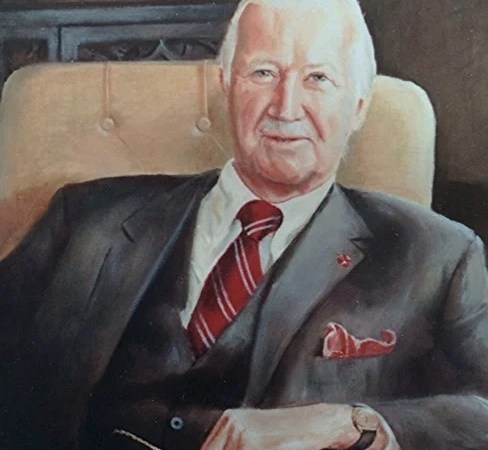
Shelby Cullom Davis was an American businessman, investor, and philanthropist from the state of New York. In 1947 he created Shelby Cullom Davis & Company, which became a leading investment firm. He later served as the American Ambassador to Switzerland under Presidents Richard Nixon and Gerald Ford.
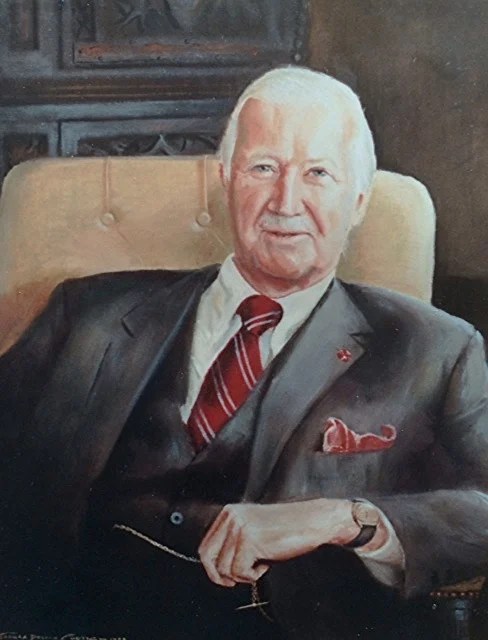
24 takeaways from one of the world’s best investor few heard of – Shelby Cullom Davis (23% CAGR over 47 years) via “The Davis Dynasty” and many more…
1 | He started fairly late, and did it all with his own capital
Shelby Davis quits at age 38 in 1947 with $50,000 seed capital from his wife Kathryn Wasserman, and turned $50k into $900m over 47 years at 23% CAGR.
It is far better to start late, than not at all, and more importantly, to do it well over long periods of time.
2 | He invested for the long term.
He never lost faith in Edgar Lawrence Smith’s credo that, stocks pay off in the long run.
He is in the market for the long pull and temporary setbacks do not discourage him.
Stocks may be risky for one, three, or even five years, but not 10 or 15 years.
3 | He knew what drove long-term stock prices – earnings.
Stock prices ride on a company’s earnings. Eventually, earnings, or the lack of same, determine whether the shareholder wins or loses.
4 | He invested through all kinds of markets
Along the way, Davis invested through two lengthy bull markets, 25 corrections, two savage bear markets, one crash, seven mild bear markets, and nine recessions; three major wars; one presidential assassination, one resignation, resignation, and one impeachment; 34 years of rising interest rates and 18 years of falling interest rates.
He sat through mild bear markets and severe bear markets, crashes, and corrections. He sat through scores of analysts’ upgrades and downgrades, technical sell signals, and fundamental blips. As long as he believed in the strength of the leadership and the company’s continual ability to compound, he held.
5 | He held through bear markets
Davis was panic-proof. Wall Street’s daily, weekly, monthly, and yearly ups and downs didn’t alter his strategy. He held on to shares through demoralizing declines, knowing that the market had misjudged the true attractiveness of the contents of his portfolio. Bear markets didn’t rattle him.
You make most of your money in a bear market, you just don’t realize it at the time.
6 | He only focused investing in stocks, not bonds.
History has shown that equities are the best way to build long-term wealth.
Davis became an antibond maverick. He realised for maximum compounding, stocks can be held indefinitely, while bonds outperform intermittently.
Stocks were superior wealth producers. A stock was a slice of corporate ownership, and, if the company thrived, its upside was unlimited.
A bondholder’s reward getting his money back, plus interest, which was limited, no matter how well a company fared.

7 | He mostly bought and held, sold some
Davis’s portfolio had the constancy of a dowager’s living room. If a company he owned failed to meet his expectations, he disposed of it. If it merged with or was acquired by a larger company, he’d sometimes take his profit and invest elsewhere. But these were exceptional cases. Mostly, he bought and held.
8 | He avoided cheap and expensive stocks
Avoid cheap stocks. Most cheap stocks deserve to be cheap because they’re attached to dud companies. Chances are, a dud company will stay that way.
Avoid expensive stocks. No business is attractive at any price. He was willing to wait until the price is right. When you like a company but not the price tag, wait for a chance to pay less.
9 | He refused to overpay.
Buying stingy became a Davis hallmark. Buying good businesses at cheap prices.
Your chances of picking the bottom of the market are very slim, but if you’re within five or ten percent, your gains can be extraordinary.
10 | His favourite double play – Earnings and Higher Multiple
Davis called this sort of lucrative transformation “Davis Double Play.” As a company’s earnings advanced, giving the stock an initial boost, investors put a higher price tag on the earnings, giving the stock a second boost. The advantages of investing in low key companies that can deliver steady, if unspectacular earnings at a modest price.
11 | He had two sources of gains :
One was slow-growth industries (steady but less spectacular 10-15% growers) where expectations were low and profits lackluster.
The other was great growth companies priced for mediocrity (or Growth as a Reasonable Price – GARP).
We buy at a bargain price we can live with for a long time. Eventually, we hope to see the stock sell at `fair value,’ and once it reaches that point, we tend to keep it as long as earnings continue to rise. We like to buy at a value price but we want to end up with growth companies.
12 | He was different and independent.
Great investing requires an independent spirit, and the courage to acquire assets the crowd disdains. Disdain creates bargains.
He zigged when others zagged, buying when others avoid. He was fearful when others are greedy, and was greedy when others are fearful.
12 | He focused on his expertise – Insurance
He was the Deputy Superintendent of Insurance for State for New York, and he used his insurance expertise (which also coincided with the rise in insurance industry) and focused on investing in insurance stocks.
Some insiders began calling him “the dean of American insurance”.
Davis was a walking Rolodex or Who’s Who of industry notables; an almanac of underwriters small and large; an encyclopaedia of actuarial trivia; a database on earnings, assets, and liabilities; an appendix of footnotes and sources.
13 | He focused on buying cheap insurance companies that were undervalued
Davis realised many insurance companies were sitting on hidden assets their stock prices didn’t begin to reflect, hidding their true profitability,
Davis bought when insurers were cheap, especially the mom-and-pop kind in his original portfolio. When these small companies were acquired by bigger companies, Davis reaped a windfall. All the names in his original portfolio were gone. After six years of jockeying and maneuvering, he’d found companies he felt comfortable owning for extended periods.
He didn’t buy insurers indiscriminately. He made sure it was profitable and its portfolio solid (not junk bonds).
14 | He swung to buying low cost, high profit, well managed compounders
The insurance industry was an inferior one, his approach similar to Buffett was to buy the low-cost operators. Both sought high-profit, well-managed insurers with minimal overhead, like GEICO and AIG. Inspired leadership was paramount
He caught the post WWII boom in home, auto and life insurance, avoiding chronic underachievers, sought out sought out aggressive, low-cost compounding machines like the Japanese insurers, Berkshire Hathaway, and AIG, which steadily enhanced shareholder value for decades.
Seven US insurance stocks gave him the kind of liftoff that today’s investors might associate with high-tech names.
15 | Building a global portfolio of insurance stocks
Before long, Davis had assembled a United Nations of insurance stocks: 35 Dutch, German, French, and Italian holdings were purchased to complement his Japanese holdings.
16 | Insurance was the tailwind that Davis had during his time
Invest in a theme / tailwinds. “Bottoms-up” stockpickers invest in companies that have favorable attributes. Be top down and bottoms up. Before putting new cash to work, looks for “themes.” Most of the time, themes are obvious.
Important to look out for long-term themes and tailwinds, and find the winners that have shown signs and are likely to emerge as top dogs, and invest in them early, hold them through long periods of time.
17 | He did not fight progress, stayed open
Shelby chose his tech stocks carefully, but he didn’t avoid them entirely, as two well-known technophobes, Buffett and Peter Lynch, had done. As long as he could find reasonably priced companies with real earnings and established franchises, he was eager to invite technology into his portfolio.
18 | Not letting emotions sway investing decisions – Lessons from GEICO
Davis was 52 when he discovered GEICO in the early 1960s. His research led him to the same lode Warren Buffett and Benjamin Graham had already worked.
GEICO was a cash cow on speed, and Davis took a sizable chunk of the ownership. GEICO put Davis on the board.
Through 1974 to 1975, the company lied about its problems to the press and to its own board, including Davis. As the biggest shareholder, Davis was the biggest loser. Benjamin Graham wasn’t far behind.
GEICO was still a low-cost operator; Byrne said it was. Byrne insisted that if the company survived, its legendary profitability would return. Based on these assurances, Buffett bought 500,000 shares at $21/8 and left a standing order to buy millions more.
Davis stormed out of the meeting, returned to his office, and promptly sold his entire GEICO stake. Customarily, Davis never let his emotions sway his investing, but this time he was too angry to admire GEICO’s future profitability and Buffett’s million-dollar vote of confidence.
To the end of his life, Davis regretted selling. Davis called Byrne and said, “if I’d known you were going to reverse the dilution, I wouldn’t have sold.”
19 | He took smart leverage, ran his own capital, not external
He first paid cash for his house, used the leverage instead with stocks, margin kept him focused.
He was running his own capital, not external, so all he needed was managing his own expectations versus the increased volatility as a result of margin.
His NYSE seat could allow his to borrow more than an individual investor, and paid lower interest rate on the margin loans, and the interest was tax-deductible.
Davis’s investing style had a good margin of safety which allowed him to use leverage wisely, and diversification and with Japan helped.
The leverage that Davis employed through the margin loans was not excessive, around ~50% or 2X, not an insane 10X, 50X, 100X which is bound to wipe most out in a matter of time.
20 | Buying everything, from 30-50 names into the hundreds / thousands later on.
In the late innings of his career, Davis strayed from his favorite industry and started buying everything.
Many CEOs he had befriended had retired, and he didn’t necessarily trust the information he got from secondary sources in investor relations departments.
Sensing he was out of the loop, and lacking the confidence to make big bets, he made hundreds of small bets.
For three decades, his portfolio had contained only 30 to 50 names; now, the roster grew into the hundreds.
21 | Diversified, never concentrated did not wipe him out even with margin
Thankfully he had Japan. Yet, given Davis’s appetite for margin, his 60% loss (from $50 million to $20 million) was well contained.
Without Japan and without changing the mix in his portfolio, 1973 to 1974 might have wiped him out.
22 | Power laws – The minority accounted for the majority of returns
Three-quarters (75%) of Shelby Davis’s assets (1992) were riding on 100 insurers worldwide; the rest were scattered among 1,500 companies of all stripes and sizes.
Davis Dozen-12 stocks (AIG, Tokio Marine & Fire, , Sumitomo Marine & Fire, and Yasuda Fire and Marine, Berkshire Hathaway, Torchmark, AON, Chubb, Capital Holdings, and Progressive, and Fannie Mae).
The bottom line on this portfolio is: A few big winners are what count in a lifetime of investing, and these winners need many years to appreciate. All of the Davis Dozen had been parked in his portfolio since the mid-1970s.
23 | Losers didn’t matter.
On the minus side of the ledger, Shelby and Chris found an ample assortment of flops, bombs, and wealth busters-or whatever other name fits stocks investors wish they’d never met.
His portfolio proved once again that, over a lifetime of investing, a handful of high achievers’ ideas can support a multitude of ne’er-do-wells.
24 | Not selling the winners
The prize required a 50-year waiting period to accumulate, but Davis lived comfortably on small, anticipatory withdrawals along the way. Once he’d bought winning companies, his best decisions were never to sell.

 www.sreeni.org